

The Exhibition
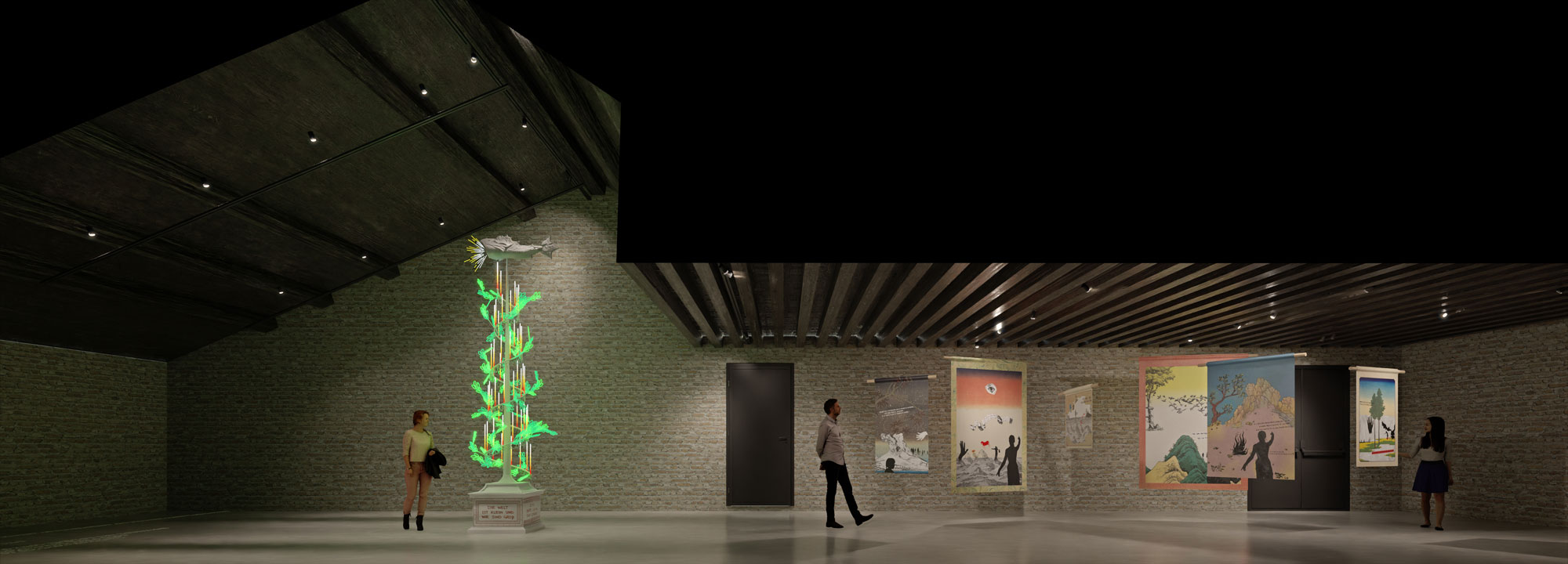
We Rise by Lifting Others, conceived first and foremost as a collective experience, comprises a monumental light installation and a series of tapestries that interweave images and texts drawn from the workshops held with families, together marking a new phase in the artist’s creative exploration and expanding her formal vocabulary through the interplay of light, text and textiles.
Luminaria: a new aesthetic
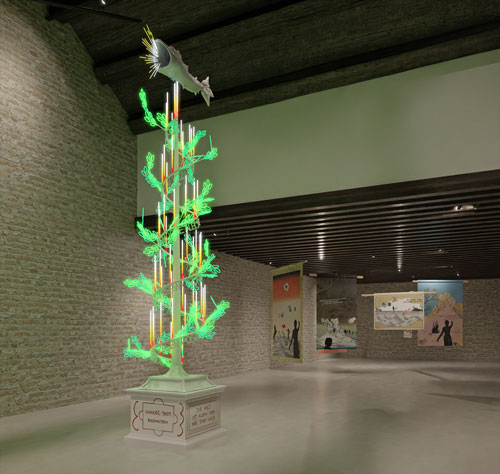
With this project, Marinella Senatore presents for the first time a new aesthetic of luminaria, one of the defining features of her work. The form evokes Baroque candelabra and the ephemeral cataphalques of grand celebrations between the 17th and 18th centuries: temporary structures designed to give tangible form to collective emotions and shared values. At the same time, it evokes the illuminations of patron saint festivals in Southern Italy, symbols of community, belonging and rebirth. Standing around four metres tall, the imposing light sculpture is conceived as a collaborative work, in which the artist’s gesture intertwines with the words, phrases and thoughts that emerged during the workshops. Light thus becomes a relational medium, a fabric that embraces voices and lived experiences, giving rise to a monument to personal and collective dignity.
The tapestries
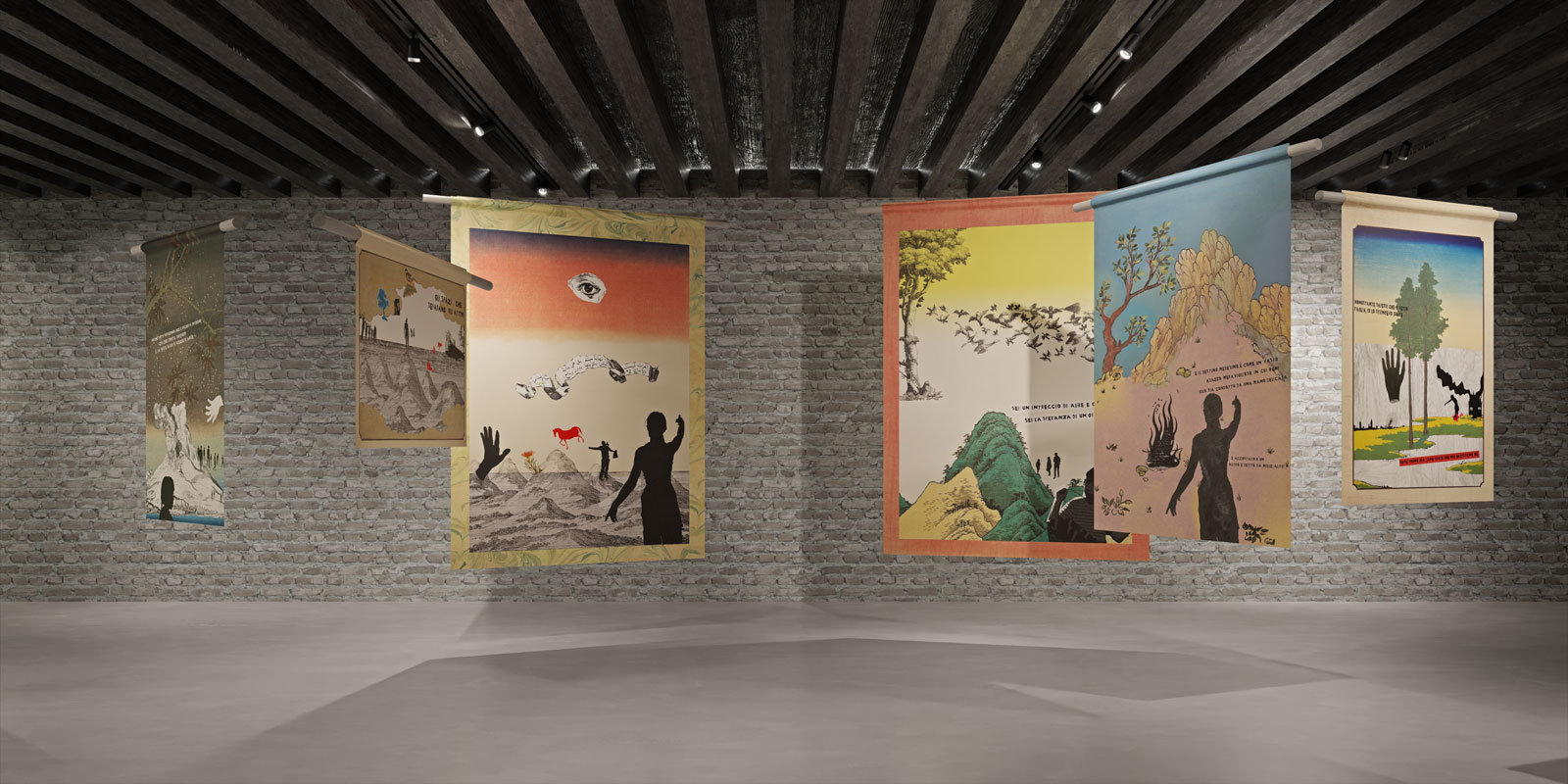
The project also features an exhibition of six tapestries that interact with the luminaria. As in ancient banners, each tapestry becomes a space for storytelling and memory: the landscape, understood as a relational environment, features stylised human figures and embroidered phrases emerging from the workshops—desires, projects and dreams, reflections on potential. In continuity with the light installation, the textiles too convey a collective narrative, in which the I opens up to the we and vulnerability is transformed into shared possibility.
The tapestries were embroidered in India by the Chanakya School of Craft in Mumbai, internationally renowned for the excellence of its craftsmanship and its commitment to promoting the heritage of traditional crafts, chosen by the artist for a deep affinity of values: the school has in fact transformed embroidery, traditionally a male preserve in India, into a tool for women’s empowerment, promoting, through vocational training, a more equitable and inclusive vision of society.
The workshops
Launched in Warsaw in December 2025 at Ta Szansa (“This Opportunity”), an NGO promoting programmes to foster positive parenting for families with children aged 0–6, the initiative continued in January in Mestre with the Istituto Casa Famiglia San Pio X, an organisation that welcomes and supports mothers and children in vulnerable situations, and then concluded in Palermo with the Centro per la Salute delle Bambine e dei Bambini, an organisation committed to ensuring equal opportunities for all children from birth. Through writing, storytelling and physical movement, the artist created spaces for sharing, enabling participants to imagine new forms of relationship in complete freedom. The workshops offered parents a truly transformative experience, characterised by inclusion and mutual listening, and created a space for connection in which parents were able to reflect on their own experiences and imagine new ways of connecting with their children, with a positive impact on the little ones.